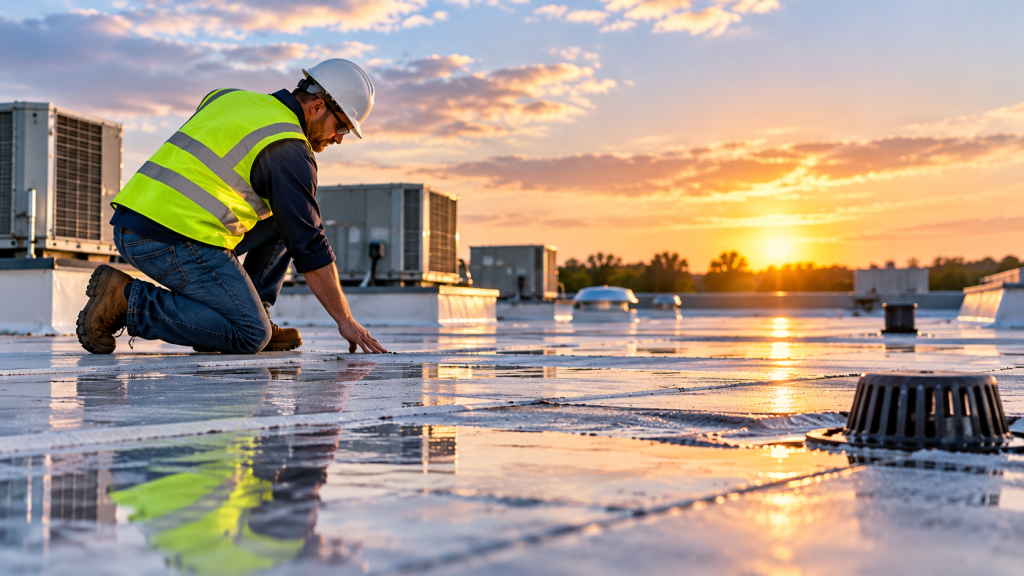
Protect Your Building, Prevent Costly Damage, and Extend the Life of Your Commercial Roof
A commercial roofing system is built to withstand years of exposure to the elements, but even the most durable roofs require attention over time. From intense UV exposure and severe storms to fluctuating temperatures and everyday wear, environmental conditions can gradually weaken your roof’s protective barrier.
Unfortunately, commercial roof damage isn’t always obvious. Small vulnerabilities can go unnoticed for months, allowing moisture to penetrate roofing materials and create costly problems beneath the surface.
For commercial property owners and facility managers, knowing when to schedule roof repairs can mean the difference between a manageable maintenance expense and an unexpected roofing emergency.
At RoofConnect, we help businesses nationwide identify roofing concerns, address damage, and maintain the long-term performance of their commercial roofing systems.
Here are five common signs your commercial roof may need repairs and why addressing them early matters.
1. Standing Water That Doesn't Drain Properly
Flat and low-slope roofing systems are common on commercial buildings, but they depend on properly functioning drainage systems to move rainwater off the roof.
When water collects and remains on the surface for extended periods, it can indicate a drainage problem or deterioration within the roofing system.
Water that remains for more than 48 hours after rainfall, under conditions that would normally allow drying, is generally considered ponding water.
Why Standing Water Is a Red Flag
Persistent ponding can contribute to several roofing problems:
Premature Material Deterioration: Prolonged moisture exposure may accelerate the breakdown of certain roofing materials.
Increased Risk of Leaks: Water can find its way through compromised seams, flashing, and other vulnerable areas.
Added Weight: Large amounts of standing water can create additional loads on the roof structure.
Drainage System Problems: Blocked drains, debris accumulation, or inadequate roof slope can contribute to water buildup.
When to Schedule Repairs
If water consistently collects in the same areas after rainfall, schedule a commercial roof inspection. A roofing professional can evaluate drainage conditions, identify potential damage, and recommend appropriate corrective measures.
RoofConnect Tip: Keep rooftop drains, gutters, and scuppers clear of debris, especially during the fall and after major storms.
2. Cracked, Blistered, or Damaged Roofing Membrane
The roof membrane is your building’s primary defense against water intrusion. When that protective layer becomes compromised, moisture can reach insulation, decking, and other critical roofing components.
Commercial roofing membranes, including TPO, EPDM, and PVC, offer dependable protection when properly installed and maintained. However, no roofing system is completely immune to damage.
Common Signs of Membrane Deterioration
Visible cracks, punctures, or tears
Blistering or bubbling across the roof surface
Open seams or separating membrane sections
Shrinkage near roof edges and penetrations
Damage caused by foot traffic, tools, or rooftop equipment
Exposed insulation or underlying materials
Why Early Repairs Matter
Even a small puncture can become a significant problem when moisture enters the roofing assembly.
Water trapped beneath the membrane can reduce insulation effectiveness, contribute to material deterioration, and eventually lead to interior damage.
Ignoring these issues may turn a straightforward repair into a more extensive restoration or replacement project.
When to Schedule Repairs
If you notice visible membrane damage, have the affected area evaluated by a qualified commercial roofing contractor.
Professional repairs can help restore the roof’s waterproofing protection and reduce the likelihood of additional deterioration.
RoofConnect Tip: Limit unnecessary rooftop foot traffic and use designated walkways where appropriate to help protect vulnerable roofing materials.
3. Loose or Deteriorating Roof Flashing
Some of the most vulnerable areas of a commercial roof aren’t located on the main roof surface. They’re found where roofing materials connect to walls, equipment, and other building components.
Roof flashing helps protect these transitions from water intrusion.
You’ll commonly find flashing around:
Rooftop HVAC units
Vents and exhaust systems
Skylights
Parapet walls
Roof drains and penetrations
Roof edges and expansion joints
Warning Signs of Flashing Failure
Look for cracked or separating flashing materials, loose metal components, deteriorating sealants, corrosion, or visible gaps around rooftop penetrations.
These conditions can create pathways for water to enter the roofing system.
Why Flashing Problems Shouldn’t Wait
Because flashing protects complex transition areas, even minor deterioration can lead to recurring leaks.
Moisture entering around HVAC equipment or wall connections may travel beneath the roofing system before appearing inside the building.
When to Schedule Repairs
Flashing should be evaluated during routine roof inspections and after significant weather events or rooftop equipment installations.
Repairing loose, damaged, or deteriorated flashing can help maintain watertight connections and protect surrounding roofing materials.
RoofConnect Tip: Whenever rooftop equipment is installed, replaced, or serviced, confirm that nearby roofing materials and flashing remain properly sealed.
4. Water Stains, Ceiling Damage, or Interior Moisture
Not every roofing problem can be identified from outside the building.
In many cases, the first noticeable indication of a roof leak appears inside the facility.
A discolored ceiling tile or small water stain may seem like a minor maintenance issue, but it could signal moisture intrusion that has been developing for some time.
Interior Signs That Deserve Attention
Yellow or brown ceiling stains
Damp ceiling tiles or insulation
Peeling paint or bubbling drywall
Water dripping during heavy rainfall
Musty odors or visible mold growth
Moisture near walls, windows, or rooftop equipment locations
The Hidden Risks of Interior Water Damage
Water doesn’t always travel straight down from the point where it enters a roof.
Instead, it may move along insulation, structural decking, or other building components before becoming visible.
This means the source of a roof leak may be located some distance from the interior damage.
Ongoing moisture intrusion can damage building materials, affect indoor conditions, and disrupt normal business operations.
When to Schedule Repairs
Document any visible water damage and arrange for a professional leak investigation.
A commercial roofing contractor can help determine whether the moisture originates from the roofing system or another building component, such as plumbing or HVAC condensation.
RoofConnect Tip: Keep a record of when leaks occur, where water appears, and the weather conditions at the time. This information can help roofing professionals investigate recurring moisture problems.
5. Roof Leaks That Keep Coming Back
If your facility experiences the same roof leak repeatedly, temporary repairs may no longer be addressing the underlying issue.
While isolated roof repairs are a normal part of commercial building maintenance, recurring problems can indicate widespread deterioration or an unresolved source of water intrusion.
Signs Your Roof Needs a More Comprehensive Evaluation
Previously repaired areas begin leaking again
New leaks appear throughout the building
Repair expenses continue increasing
Water intrusion occurs during nearly every major storm
Roofing materials show widespread aging or deterioration
Maintenance teams spend increasing time responding to roofing emergencies
Repair, Restore, or Replace?
Not every recurring leak means your commercial roof needs to be replaced.
In many situations, targeted repairs can resolve problems and extend the roof’s useful life. However, if damage is widespread or the roofing system is approaching the end of its expected service life, restoration or replacement may offer better long-term value.
A professional roof condition assessment can help determine the most practical solution based on the roof’s age, material, condition, and repair history.
RoofConnect Tip: Track roof repairs and maintenance expenses over time. Reviewing this history can help identify recurring problem areas and support more informed capital planning decisions.
How Preventive Roof Maintenance Helps Avoid Costly Repairs
The most effective commercial roofing strategy isn’t waiting for something to fail. It’s identifying potential issues before they become emergencies.
Routine inspections and preventive maintenance allow facility managers to monitor roofing conditions, prioritize repairs, and better understand the remaining useful life of their roofing assets.
Benefits of a Proactive Commercial Roof Maintenance Program
Fewer Unexpected Emergencies
Regular inspections can identify vulnerabilities before they develop into active leaks or major roofing failures.
Longer Roof Service Life
Addressing minor damage and maintaining roofing components can help maximize the useful life of an existing roofing system.
Better Maintenance Budgets
Understanding current roof conditions allows facility managers to plan repairs and future replacements instead of relying on reactive spending.
Reduced Operational Disruptions
Preventive maintenance can help minimize unexpected leaks that interfere with employees, customers, equipment, and daily operations.
Improved Roof Documentation
Detailed inspection reports, repair records, and maintenance histories provide valuable information for asset management and applicable warranty requirements.
For many commercial buildings, professional roof inspections are recommended at least twice per year, typically during spring and fall, with additional inspections following severe weather. Inspection frequency should also account for the roof’s age, condition, and manufacturer requirements.
Nationwide Commercial Roof Repairs and Maintenance with RoofConnect
When commercial roofing problems arise, having a dependable service partner can make all the difference.
At RoofConnect, we specialize in helping businesses protect and maintain their commercial roofing assets through coordinated nationwide service and experienced roofing professionals.
Whether you’re responsible for one commercial building or hundreds of facilities across multiple states, our team provides roofing solutions designed to minimize downtime, address immediate concerns, and support long-term roof performance.
Our Commercial Roofing Services Include:
Emergency Roof Repairs & Leak Services: Responsive support when unexpected leaks or storm-related roofing damage threaten your facility.
Commercial Roof Repairs & Replacements: Solutions tailored to your roof’s condition, material, and operational needs.
Professional Roof Inspections: Evaluations to identify existing damage, potential vulnerabilities, and maintenance priorities.
Preventive Maintenance: Ongoing roof care designed to reduce avoidable damage and extend roof service life.
Roof Warranty Programs: Support for maintaining roofing systems and addressing applicable warranty-related requirements.
Smart Leak Detection: Technology-based solutions that can help identify moisture concerns and support proactive roof management.
With nationwide service capabilities and a commitment to consistent quality, RoofConnect helps facility managers simplify commercial roof maintenance across their properties.
Don't Ignore the Early Signs of Commercial Roof Damage
Ponding water, damaged roofing membranes, deteriorating flashing, interior moisture, and recurring leaks are all indications that your commercial roof may need professional attention.
The sooner these problems are identified, the more opportunities you have to address damage before it leads to larger expenses or operational disruptions.
A proactive approach to commercial roof maintenance can help protect your building, preserve your roofing investment, and keep your facilities operating efficiently.
Is Your Commercial Roof Showing Signs of Trouble?
Don’t wait for a minor roofing concern to turn into an expensive emergency.
📲 Ready to Get Started? Contact RoofConnect today to learn more about our nationwide commercial roof repair, inspection, and preventive maintenance services.